research experience
A Review Of Sustainability Strategies Of Traditional Architecture In The North Of Iran And Its Adaptation To Modern Architecture
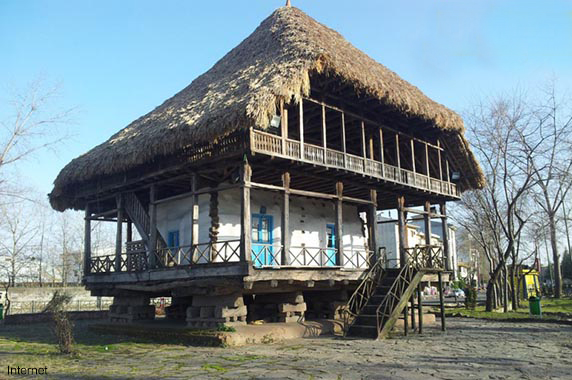
The past architecture of the north region of Iran presented effective green strategies, whereas any of them do not apply in modern architecture. In this area, there is significant rainfall in winter and hot and humid weather in summer. The old buildings were constructed under the climate condition. Therefore, it is vital to follow the traditional patterns because not only reduce energy consumption but also improve the environment. This study aims to understand the sustainability methods completely, then update them to respond to today’s need. Firstly, five different traditional buildings were analyzed in terms of form and material. As a result, the most significant points are the design of the balcony, opening, roof, and the type of material. In the second step, a new form of the building is proposed and modeled with due attention to the points mentioned above. The model is equipped with a sloping roof and rainwater harvesting system, natural material with proper insulation, smart canopy, and balcony. Moreover, the model could be generalized and developed in this region in the future.
The Proposed Rainwater Collector Model In Typical Residential Apartments In Iran And Solutions For Using The collected Water
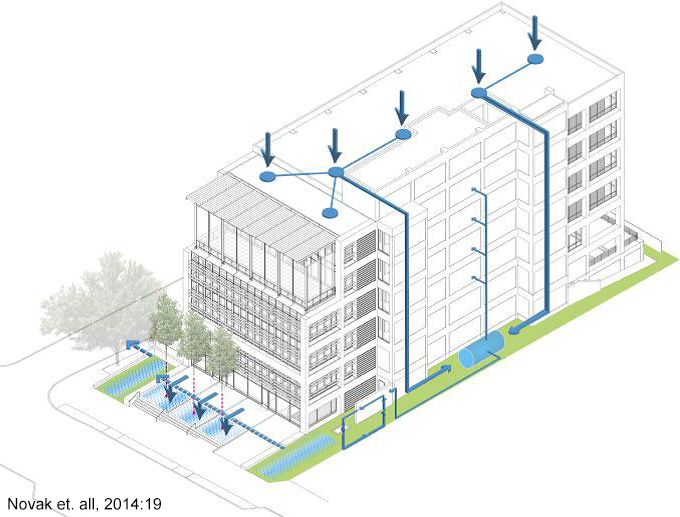
Developing countries, including Iran, have faced a severe problem of drinking and non-drinking water supply for residents. Rainwater could be used as an alternative source in buildings. It is proved that it can be a big step to solve the massive problem of water shortage, especially when it applies on a large scale. A wise method is the harvesting of the surface water of the apartment’s roof. The main target of this study is to produce a viable model to benefit from rainwater in flats. Here, different models of water harvesting and their storage systems were analyzed. Then, an optimal system was designed based on a typical residential plan of apartments in Iran. The result shows that such systems can easily match by both architecture and construction maps. The model includes a network of pipes to use water in toilet flushing, heating system, and laundry. Analyzing the design shows that it is an effective way to reduce household water consumption because it is a simple plot that requires a low construction budget.
A Review Of Different Criteria For Selecting The Best Building Structural System Based On Environmental And Economic Sustainable Development Principles
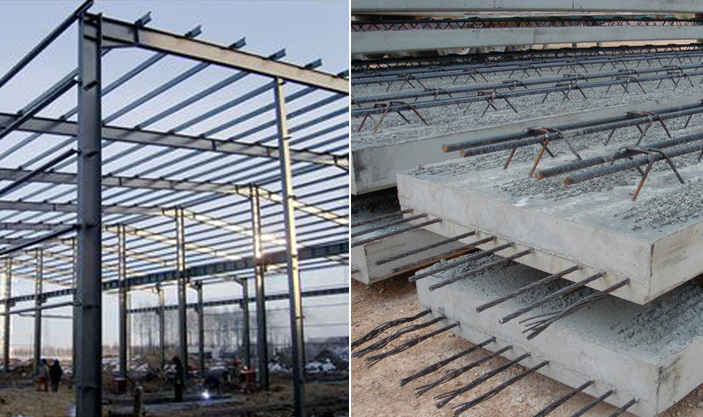
One of the severe problems of Iran’s construction industry is the use of traditional material regardless of environmental and economic factors. Not only does it damage the environment but also it increases the expenses of construction and maintenance. Thus, it is essential to consider sustainability principles to choose the right building material in today’s development. The primary purpose of this study is to investigate modern construction systems and also the advantageous and disadvantageous of them. Here, a series of environmental and economic criteria are specified to select the best method, and systems are ranked based on them. These systems are Light-weight Steel Frame, Reinforced Concrete Continuous Frame, Pre-cast Concrete System, 3d Panel, and Hot-rolled Steel System. The results show that the most optimal economic structural system is Pre-Cast concrete and the environmental one is Light-weight Steel Frame. The systems ranking could assist contractors and engineers in selecting their system appropriately according to the types of buildings and their functions.
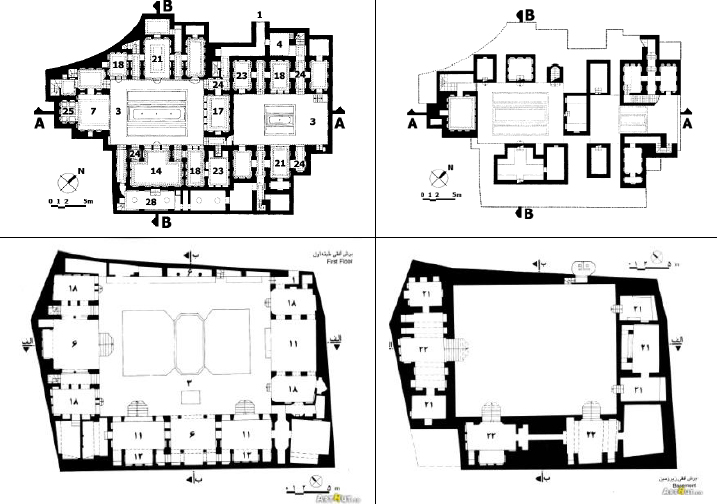
Investigating The Transformation Of Architectural Elements Of Interior Spaces In Residential Buildings From The Qajar To The Present Time With Form Approach (Case Study: Historical Houses In Tehran)
Building a house following the Iranian culture and climate is one of the significant issues of today’s architecture in Iran. The Interior design of houses is of considerable significance because it is regarded as the central space of living for its residents. Unfortunately, traditional Iranian houses are rapidly being destroyed regardless of the importance of different rooms and their arrangement, which conformed with the Iranian lifestyle. This study aimed to analyze the form of interior elements of houses at different times and upgrade the positive points of them in today’s architecture to improve the quality of life. The elements and their arrangement were investigated in two houses of the mentioned historical period, Qajar (1789-1925), Pahlavi (1925-1979) and contemporary. The result indicates that there is a negative transformation in the interior spaces of the houses. The most important one is that open spaces have gradually shrunk as time has passed. It also shows that some elements like pool, garden (parterre) and yard play a small role in houses. In the past, each space was designed with proportionate geometric form, and they were linked together with appropriate connection spaces. However, most of the interior spaces have no these characteristics. Considering the points above, the quality of residential houses could improve to a large extent.
The Study Of Psychological Effects Of Sub-Dome Space As One Of The Constant Traditional Element Of Islamic Mosques
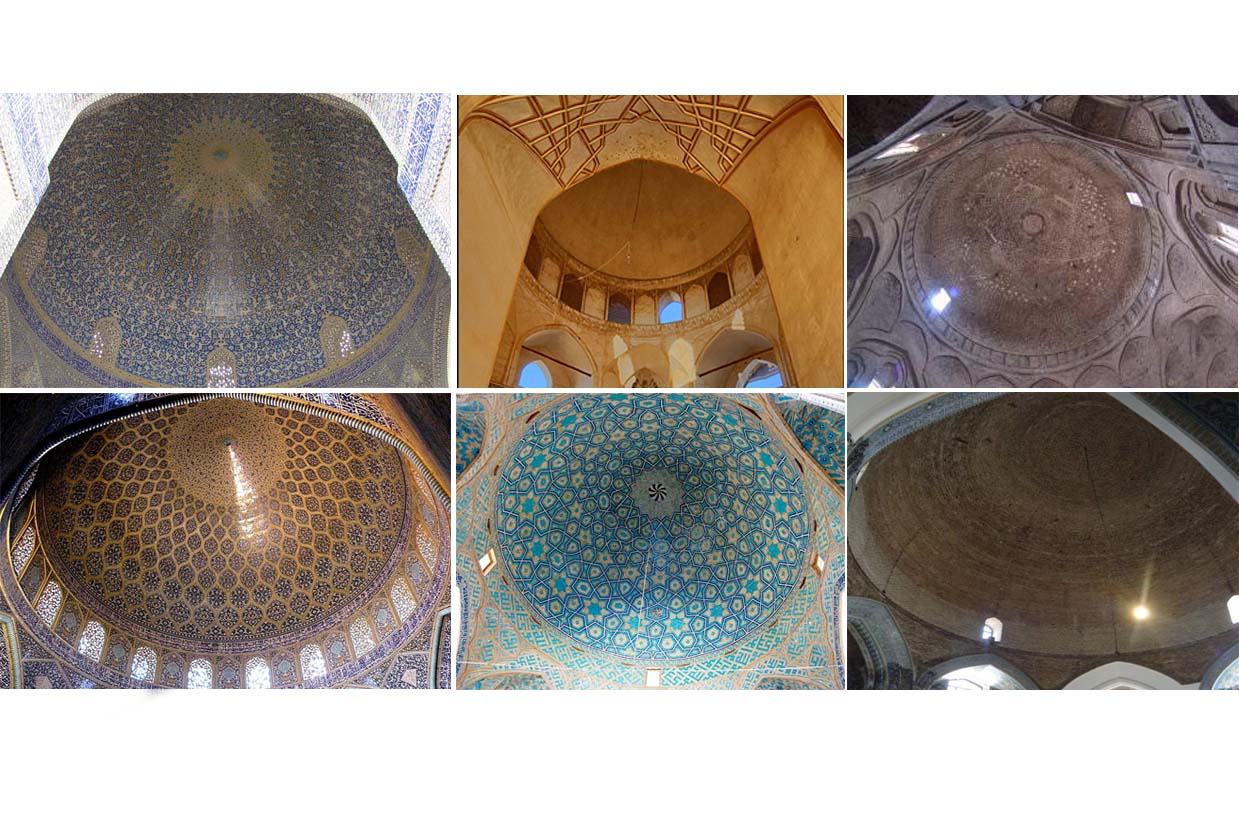
One of the main elements of Islamic mosques in different periods is dome. Its permanent use in mosque construction shows that it has a unique feature that requires more research and understanding. These kinds of studies lead to designing today’s dome wisely. The important questions are to what extent this element can affect humans psychologically and how we can improve these feelings in today’s dome construction in holy places. To evaluate the perception and describe it in architecture, Kansei engineering, design based on emotion, was applied. This method could link the physical properties of the artificial environment with the mental states. Firstly, twenty number of one-second films showing the spaces under domes were collected. Then 6 of them were chosen based on architectural differences. Secondly, a questionnaire of adjective-couples was written to help the observers to describe their impression clearly. The final result of the poll filled with 100 people, shows that the traditional dome of the mosques has a tremendous spiritual impact on users. Furthermore, the height, the number of openings, and the ratio of height to diameter are considered as the significant factors to strengthen the feelings of spirituality.